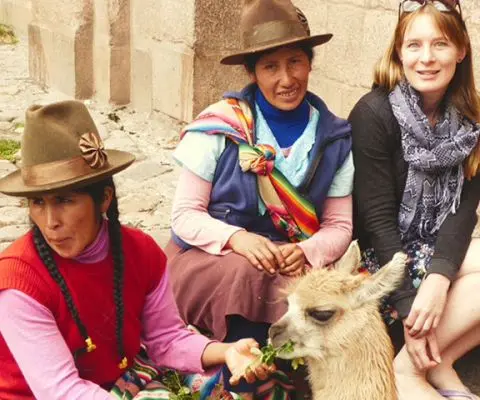
Build your professional experience! Expand your network, meet industry leaders, and grow your resume.
Internships abroad are becoming the new favorite in the world of international experience. Becoming an intern abroad means gaining practical, hands-on experience at an international company or organization, while still having all the fun adventures (and sometimes even college credit) afforded during a study abroad program. If your career goals are already in razor-sharp focus or if you’re trying to make career moves after graduation, then it might just be time to start browsing international internships!
Do your international internship with Maximo Nivel - get international work experience in Costa Rica, Guatemala, and Peru.- Education (K-12)- Special Education- Micro-Business- Hospitality & Tourism- Human Rights- MedicalPlease take note of these quali...
Are you a student or young professional looking to enhance your career prospects through international work experience and hands-on learning? At Intern Abroad HQ, we help students and young professionals turn career aspirations into reality. We organiz...
Get ready for the adventure of a lifetime with Premier TEFL Thailand Internship. This fully paid, all-inclusive programme gives you the chance to teach enthusiastic students in lively Thai classrooms while soaking up the country’s vibrant culture, brea...
Known as "the Silicon Valley of Europe," Dublin buzzes with innovation and opportunity! Home to the European headquarters of tech giants like Microsoft, Google, Amazon, Facebook, and eBay, this city is a hub for global industry leaders. Join us and gai...
An international internship in Edinburgh gives you an amazing opportunity to live and work in a fascinating global city. Scotland's capital is set among towering hills, parks, and ancient buildings – many from the Middle Ages.In Edinburgh, you’ll stay ...
Looking to get ahead over the summer, need academic credit as part of your degree, or just graduated and wondering what’s next? Turn your academic achievements into professional work experience with a 1-12 month internship in the UK. What is Intern UK?...
Intern abroad in one of Southeast Asia’s most dynamic countries: Vietnam. The highly unique and resilient nation buzzes with energy from the southern metropolis and economic hub of Ho Chi Minh City to the northern capital city and cultural center of Ha...
Take your career goals abroad with Expanish’s Intern Abroad program in sunny Valencia, Spain. Designed for university students and recent graduates, this summer program combines professional internship placements with cultural immersion and optional Sp...
Intern abroad with SRISA! Take full advantage of your study abroad opportunity with an internship in Marketing, Curating, Social Media, Photography, and more. Depending on your skills and availability, we’ll find you a suitable internship in your area ...
If you want to know how to get an international internship, it’s actually quite similar to finding a study abroad program. Start by asking yourself two key questions:
What are your career goals?
Finding internships abroad largely depends on narrowing down your career goals. Once you know what it is that you want to do or which skills you want to improve, you’ll be that much closer to finding the right internship abroad for you.
Do you need college credit?
Are you a college student seeking credit towards your degree, or are you a post grad or even mid-career professional? If you don’t require college credit for your international internship, it will actually greatly widen your options, since some university degree programs can be strict about what they accept for credit. If you don’t need college credit, your program options are basically limitless—meaning your dream internship is practically guaranteed. Intern abroad organizations have connections all over the world, so if you’re willing to pay the program fee, you’ll get unrivaled experience to add to your resume or CV.
Locations
Where to find an international internship
If you’re looking for internships overseas rather than in your home city or country, then we can guess you have an affinity for travel. If you have a specific type of internship abroad in mind, it might make the destination obvious. However, if you simply want professional experience in a certain destination in order to perfect your language skills or learn the cultural norms, then you should let that guide your program search.
If you're trying to improve your Spanish skills, then choosing Spain, Mexico, or Peru could be good places to start with. But if you want to immerse yourself in Japanese culture then you're going to have to go to Japan.
International internships exist everywhere in the world! But if you want to know where to start looking, start with where you want to go. It can also be helpful to either look for international internships at your companies of interest, or to ask your program advisor where the best internships in your career field are located. When looking for the best places to intern abroad, it helps to think about your career goals first.
If you want to explore the business world, then places like France, China, and Italy could be a great start. But if you're more interested in wildlife or conservation, then you'll want to consider destinations like Costa Rica, South Africa, or Thailand.
Finances
How to afford an internship
How will you pay for an internship abroad? Interning abroad through a program can be pricey, but worth it. Your internship provider will find you a killer placement in your chosen field, while taking care of details like accommodation and meals. Some even offer post-internship job finding assistance! All of these benefits come at a price, but it pays off (sometimes literally). Plus, it’s not impossible to find a paid internship abroad (although you’ll have to do a bit more digging).
If you’re looking for an internship abroad, a common misconception is that you need to find and apply for specific opportunities, like you would normally do with jobs. However, there are actually thousands of opportunities to custom-build a guaranteed internship abroad. These opportunities operate similarly to study abroad, but are instead focused specifically on professional growth and experience. Our internships abroad directory is a great place to start your search. This is an excellent resource if you want to search by destination, career field, or timeframe.
Yes, there are definitely paid internships abroad. However, it will be far more common to find unpaid internships. Depending on your field and destination, paid internship opportunities are few and far between, and tend to be a lot more competitive. If you want to intern abroad but can only find unpaid internships, then you’ll need to find the additional value in the experience. Will you be able to network with important professionals in your industry? Will you receive help with writing your resume and cover letter? Will you get a letter of recommendation or two? Early in your career, these types of benefits can change the trajectory of your career.
Internships abroad are highly useful! This is true no matter what your academic or career field is, but especially so if you plan to live or work abroad someday, or really want a way to make your resume more competitive. Interning abroad is an excellent way to get work experience while availing all the other benefits offered by studying abroad.
There are many benefits of interning abroad—namely, the exceptional personal and professional growth that comes hand-in-hand with the experience. Plus, internships abroad are flexible. You can intern abroad during college, after graduation, or if you’re interested in a career change, and there are thousands of opportunities across dozens of fields. And not to mention, you’ll have life-changing adventures and make tons of new friends and connections!
With thousands of opportunities around the world, how do you find the best of the best when it comes to internships abroad? It’s actually pretty simple—it all comes down to what your goals are and what you want out of an internship abroad! A few things your internship should absolutely have is pre-departure support, resume writing help, help with your job search post-internship, and alumni networking. And if the entire premise of your internship is a custom placement, you should expect them to deliver on your initial wants and requests.
I thoroughly enjoyed my time with International Medical Aid in Mombasa. I always felt safe, supported, and accommodated. The staff at the residence were lovely, and the food was amazing. My favorite parts of my trip were meeting and connecting with new people and exploring the city. I especially enjoyed visiting local schools and interacting with students. I hope I made as much of a positive impact on the community as it did on me. My interest in medicine as a career sparked as a young child, inspired by my uncle’s white coat and stethoscope. I didn’t fully understand what being a physician meant at the time—all I knew was that my uncle helped people. As I grew up, I became interested in science as a whole. When I was in middle school, my mother was pursuing her PhD in stem cell biology, and I often accompanied her to the research lab she interned at. I didn’t understand the nature of her research but was eager to come along just to watch her pipette samples. In high school, I got my first real introduction to what a career in healthcare could look like for me. I enrolled in a health science dual credit program with my local community college, which allowed me to take college-level science courses along with my high school curriculum. This included a course in emergency medicine, in which I was able to complete clinical rotations at my local fire station and emergency department. This was my first hands-on exposure to emergency medicine. My second experience in emergency medicine was as a volunteer at a local hospital, which I started a few months before my trip with International Medical Aid. First Impressions My trip to Mombasa was my first time traveling internationally by myself. Initially, I was a bit nervous, but my confidence grew as soon as I boarded my 14-hour flight from New York City to Nairobi. The pilot read my name off of my boarding pass and, recognizing it as a Muslim name, greeted me with “Salam Alaikum” (the traditional Muslim greeting, meaning “peace be upon you”). Hearing this familiar greeting eased my worries and helped me feel more comfortable with the idea of being in unfamiliar situations for the rest of my trip. On the ride to the residence, I noticed that the city of Mombasa (and its tuk-tuk-studded traffic) reminded me of my parents’ hometown of Hyderabad, India. The day after I arrived, my intern group and I toured the hospital where we would be volunteering. Coast General Teaching and Referral Hospital is the second largest public hospital in Kenya with a 700-bed capacity (Coast General Teaching & Referral Hospital, 2023). We learned that the hospital has been serving the people of Mombasa since it was first established around 70 years ago. The first thing I noticed about the hospital was that it was open-air, which I haven’t seen in the United States (but have seen similar facilities in India). There was also a large crowd waiting near the entrance, demonstrating the high demand for medical care where resources are not as readily available as in a developed country. Within Coast General Teaching and Referral Hospital I spent my first week in the accident and emergency department. I immediately noticed that the emergency department at CGTRH was much different from the ones I had seen back home. The emergency departments I had volunteered at in the United States were generally quiet. Patients stayed in their private rooms and were calmly treated by whichever nurses were assigned to them. At CGTRH, patients did not have private rooms—there were curtains available if there was a need for privacy, but these usually stayed tied up and out of the way. Most days, each bed was occupied by a patient. The injuries themselves were also completely different from what I had observed in previous shadowing experiences. From my personal experience, I had seen most people in the States come in for reasons like chest pain, falls, and the occasional motor vehicle collision. At CGTRH, patients had severe injuries after being in tuk-tuk accidents or assaulted with weapons like machetes. Other interns who had been in the program longer had said that the emergency department is usually very chaotic, so I did feel a little prepared—however, hearing about it is different from actually seeing the action firsthand. One of the first patients I saw was a twenty-year-old male who had been assaulted after he was caught stealing food—one of the other interns told me that patients often come in after being assaulted for theft. He had a head injury that needed sutures and his head was wrapped in bandages. He seemed a bit disoriented. Throughout the rest of my week, I checked on him at the beginning of each shift. He was usually resting, but I once saw him sitting on the floor against the wall in a different part of the emergency department, looking disconnected from what was going on around him. The other interns and I asked a nurse about him, and she looked at him sympathetically, explaining that he was confused. Hearing that this patient’s circumstances are common highlighted to me the interactions between healthcare and social issues, especially in regions where resources are limited and the healthcare system is overburdened. Another patient I saw on my first day was a male patient who had previously had his left leg amputated above the knee. He came in after being involved in a tuk-tuk accident—he was the one driving the tuk-tuk, and his right leg was injured. Again, the prevalence of injuries resulting from tuk-tuk and traffic accidents underscored the physical toll of daily life in Mombasa and the realities of transportation and limited road infrastructure and traffic management resources (Bashingi et al., 2020). The patient that impacted me most on my first day, however, was a little boy in the pediatric emergency department. He had a severe injury on his lower back and his father said that he burned himself while trying to get into a bath that was too hot. The nurses were doubtful of this story because of the placement of the injury and suspected that it was intentional child abuse. They were waiting for a burns specialist and a social worker—I later learned that the injury might not have been a burn at all, but could have resulted from the child being dragged across concrete. Lack of Resources On my first day, I had already seen much more severe cases than I had ever encountered. A fellow intern, my roommate, shared her experience in the newborn unit. A newborn was pronounced dead soon after being born the previous night but was resuscitated—she wasn’t doing well the next day and sadly passed away after efforts were made to resuscitate her again. My roommate witnessed this and wanted to take a break because it was understandably upsetting to watch, but the doctor said that she should stay because she should see it. She later learned that the baby could have been saved if they had a working ventilator available. It was awful to realize that this could have been prevented if only there had been enough resources—I had heard before that Kenyan healthcare lacks the amount of resources American hospitals do, but it was difficult to see this in action. The WHO recommends 23 healthcare workers for every 10,000 patients; as of November 2018, Kenya has a ratio of only 16.5 healthcare workers for every 10,000 patients (International Medical Aid, 2024). Furthermore, according to World Bank data in 2018, the current health expenditure per capita in the States is $10,623.85, while in Kenya, it’s only $88.39 (International Medical Aid, 2024). The cost of healthcare afforded per person in Kenya doesn’t even cover one percent of the cost of healthcare per person in the United States. I kept being reminded of this statistic throughout the rest of my time at CGTRH: one day, a woman was going through labor in the emergency department and couldn’t be transferred to the obstetrics department because they didn’t have a bed available. Another time, an intern and I recorded patients’ vital signs at the cardiac center using one pulse oximeter and one blood pressure cuff for everyone, sanitizing them between each use. The blood pressure cuff wasn’t large enough to fit every patient and popped off a few times, so we used their forearms instead. I also saw a patient who had come into the emergency department after being assaulted with a machete and needed a CT scan before surgery. There is only one CT machine at CGTRH and the radiology department is in a separate building. I helped wheel this patient’s bed down the uneven road, its wheel getting stuck in a small ditch right outside of the radiology building. We then waited for a while as there was a long line of patients waiting to get CT scans as well. Witnessing these challenges firsthand allowed me to appreciate the resources available in the United States and gain an understanding of the global disparities in healthcare access. Compared to healthcare facilities in the States, the scarcity of essential medical equipment and the overwhelming demand at CGTRH often led to insufficient care. Consequences of an Overburdened Healthcare System Later in the week, I saw a patient who had been in a motorbike accident. He was unconscious and had blood on his face and his oxygen mask. He was clearly struggling to breathe, indicated by the wheezing, and his oxygen saturation was at 87. There were doctors and nurses having their morning meeting nearby and I assumed that they had already done everything they could, until a doctor noticed the patient and yelled for someone to get a suction machine. He suctioned out a large amount of a thick, pink blood-and-mucus mixture from the patient’s mouth and I watched as his oxygen saturation shot up to 97 and then 100. I realized that this patient was lying there and suffering for so long because his airway was blocked, and something could have been done to relieve his discomfort the whole time. This frustrated me because if only I was aware that something could be done, I could have notified somebody. This incident emphasized the importance of staying vigilant in medical settings. One day, I was with some other interns in the pediatric emergency department. There was a baby under a year old who had first gone to another facility ten days prior for pneumonia. He had a pleural effusion which became septic and his lung had collapsed. We were in the room attached to the main department when we heard the wailing—loud, prolonged, and deeply painful. When we returned to the main room, we saw that the baby had flatlined. A PA student informed us that they had just pronounced him dead. The mother had gone outside—she was the one wailing. An older woman was crying on the phone near him who we assumed was the grandmother. We stood there in shock, wanting to help somehow but not knowing what to do. I noticed that not even two minutes after the baby was pronounced dead, one of the nurses at the nurse station was telling the others a story and they all burst into laughter. The contrast between the laughing nurses and the crying grandmother was bizarre to me. When talking about the incident later, one of the other interns said that the nurses had likely become desensitized after facing similar situations so often. I had previously heard of this phenomenon, but watching this reminded me of the emotional tolls that come with working in healthcare and caused me to wonder how I would handle such circumstances so frequently. That same day, I spent a shift in the maternity department and was able to witness a C-section. I had never seen one before, and it was nothing like I had expected. I always imagined it to be a procedure that’s performed very gently and with the utmost focus—instead, it happened rapidly, with the nurses making a small incision before using their hands to retrieve the baby. I was surprised that it all happened in less than two minutes, and after the events earlier that day, I became emotional the second I heard the baby’s cries. One of the other interns noticed that when the baby was delivered, his head was pointed downward. She asked a nurse why they had to do a C-section and he explained that they had incorrectly assumed that the baby had breeched and the patient didn’t need the procedure after all. I learned that the suturing afterward takes the most time. The nurses had to suture each layer that they had cut through—the uterus, every layer in between, and then the skin. The whole procedure took less than an hour. Moments of Care and Compassion Among the daily bustle in the emergency department, there are several heartwarming moments I remember fondly. A woman was brought in wailing after she was involved in a traffic accident. The left side of her face was scraped and bleeding, but her injuries didn’t seem severe. The other interns and I were wondering why she was screaming and crying so much and a doctor informed us that she was a psychiatric patient. A fellow intern asked for permission to try and calm her down by holding her hand. As she approached the patient, the doctor warned us to be careful because she was mentally unstable. She started gently caressing the patient’s hand and nodding sympathetically but the patient wasn’t registering and continued screaming. A short while later, some of the staff cleaned her up—it turned out that she had a fear of receiving shots and that might have been why she was screaming. They cleaned her arms with wipes, even where she wasn’t hurt—I believe to calm her down and make her feel cared for. There was also a younger patient, perhaps in his teens or early twenties, who was being discharged. As he was leaving, he was waving and saying “bye-bye” to the staff. I hadn’t interacted with him previously, but he said “bye-bye” to me and extended his hand towards me—I instinctively reached out, thinking that he was going to high-five me. He instead interlaced his fingers with mine and smiled at me. Later, I was able to watch a patient being treated for a head injury. The nurses were suturing the injury on the top of his head and he was talking and joking with the nurses all while in pain. When the pain intensified, he would throw his legs up in the air before returning to joking. I found it both impressive and endearing that this man was able to stay optimistic while undergoing treatment. Perhaps the most moving instance I witnessed, however, was when Baby Anna’s father held her for the first time. Baby Anna was born three months earlier and had stayed in the newborn unit after her mother passed away during childbirth and her father hadn’t come to take her home. I was told that she also had a twin who passed away during childbirth, and this may have been why her father didn’t come. During my second week at CGTRH, Baby Anna’s father visited. He explained that he hadn’t been able to provide for her and one of the other interns offered him some money for baby formula, which he accepted before leaving. The doctor advised us against offering him money, saying that he was irresponsible because he left his baby at the hospital for months. We were unsure if he would return and were trying to find a way to support Baby Anna long-term. Shortly after, her father returned to take her home. We brought Baby Anna to him and he teared up as he held her. It was an incredibly touching moment and I am grateful that I was able to witness it. Community Outreach One of my favorite parts about my stay with IMA was the community outreach. I loved traveling to local schools and interacting with students of all ages. We first visited Makande Girls Secondary School and when we entered the courtyard, a crowd of primary school students eagerly raced over to greet us, hugging us and playing with our hair. I didn’t expect such enthusiasm and excitement! We spoke about women’s health at this school and we were told beforehand that there was some stigma surrounding certain topics due to the prevalence of religion in the area—namely, Islam and Christianity. I believed that I was well-prepared, being Muslim myself—however, during our presentation, one of the teachers became upset with us when we were answering a question about feminine products, citing religion as the cause for the students’ concerns. I then realized that even though I assumed I share the same religious beliefs, there are still cultural beliefs that interact with religion and create a gray area, and that I still have to be sensitive to different perspectives within the same religion. We also visited a primary school to speak about hygiene and another secondary school to discuss mental health. During all of these visits, I noticed that many students were curious about life in the United States and wanted to live there one day. Some asked me about Islam in the States and whether they would be allowed to wear their hijabs there—they seemed shocked when I told them there were a lot of Muslim people. One girl in primary school asked me if there was snow in the United States and if they could play in it and make snowmen. These interactions were both heartwarming and eye-opening. Personal Impact As an intern, my duties mostly consisted of shadowing and asking questions. In some cases, the most I was able to do was help calm patients down while the nurses inserted an IV line or hold a catheter bag while a patient moved from her bed into a wheelchair. Sometimes, all I could do was let a patient know their friend was waiting for them at the entrance or just smile and wave back at a patient as he left. I found these moments rewarding, but they made me realize just how much I long to be able to do more. If I knew beforehand that the patient with the low oxygen saturation was struggling to breathe because of the blockage, I could have been the one to take action and suction the blood and mucus out of his airway—or I could have at least known that there was something to be done and notified someone who was qualified. During my time at CGTRH, sometimes patients, cops, or family members thought that I was qualified to do more than I actually am—this increased my desire to be able to help. After just three days, I realized that I do not want to stand by unaware of what to do when I could treat patients with compassion and understanding, making them feel safe and comfortable—especially those who are in pain or arrive at the hospital alone. My time at CGTRH only strengthened my goal of helping those who truly need it, especially in underserved communities. According to the WHO, the number of medical doctors per 10,000 people in the States jumped from 25.704 to 36.082 from 2018 to 2021, while it decreased from 1.61 to 0.982 in Kenya across the same timeframe (World Health Organization, 2021). This highlights the need for healthcare workers in developing countries such as Kenya, in contrast to a surplus in developed countries. Beyond my experiences at CGTRH, I deeply enjoyed connecting with new people. During my first week, a nurse in the emergency department and I were discussing our love for henna and she brought me two henna cones that Friday. I also met a lovely student caretaker around my age in the pediatric emergency department who brought me shawarma during my overnight shift. Outside of the hospital, I met people on the beach who would ask me about my ethnicity and life in the United States; I also met a man named Julius who sold homemade souvenirs outside of the grocery store who would remember me and greet me every time I visited. I enjoyed each of these conversations and loved exchanging our perspectives. After returning home, I resumed volunteering in the emergency department at my local hospital. I was able to recognize some of the conditions the patients came in with—one had a congenital heart malformation, which I first encountered in a pediatric patient at CGTRH who was undergoing open-heart surgery. There was also a patient with hydronephrosis, which I had seen in Mombasa in an HIV patient. I asked a nurse about the causes of this condition (she said structural changes like a mass or kidney stone), and I was able to connect this information with what I had observed during my internship. My time in Mombasa was fulfilling and transformative, both professionally and personally. I am grateful I was able to learn about the challenges of healthcare in underserved regions, and this experience strengthened my determination to pursue a career in medicine. I am especially thankful that this experience allowed me to step outside of my comfort zone and helped me realize what I am capable of and what I would like to achieve in the future.
Gratitude, Perspective, and Purpose — My IMA Internship in Kenya
The time I spent in Kenya was life-changing. I did not want to leave. The residence and the staff make you feel like you're at home and are very accommodating with special needs you may have. The hospital and the medical staff are welcoming and genuinely want to help you learn and experience new things. Outside of the hospital, I participated in all of the cultural treks and learned so much about Mombasa and surrounding areas. I'm happy I went on two safaris because I was able to see regions in Kenya. My favorite part was visiting the orphanages and giving one-on-one attention to kids. The smile on their face when receiving a sticker made the entire trip worth it. I can't wait to go back to volunteer at the orphanages and hopefully as a physician assistant as well. I came to Kenya with a general idea about what the healthcare system would entail, visually expecting small huts, minimal electronics, limited transportation, and overall a severely impoverished area, as well as anticipating interactions with local people to be limited or insignificant. I mistakenly created an implicit bias for this country and its people. “Welcome to Kenya.” “You are one of us.” “We welcome you, our home is your home.” All of these phrases comforted me as I acclimated to a foreign country. Culture shock is defined as “the feeling of disorientation experienced by someone who is suddenly subjected to an unfamiliar culture, way of life, or set of attitudes” (Oxford Languages). I never felt this unwavering feeling; instead, my comfort level was at an all-time high. I became so infatuated with the people around me and their way of living that it made it hard for me to picture myself going back to America. The simplicity of the basic needs and the resources available made it impossible to always want more. In America, consumers are constantly wanting more, leading to sellers producing even more. Yet, in Kenya I felt comfortable with the only few things I had. I never had the desire to buy more things to fit in with society or to make my life easier during the time I was there. I simply was living and enjoying the few things I had. I felt a similar way when I spent time at Coast General Teaching & Referral Hospital (CGTRH) in regard to how medical care was being provided. The medical providers focused on the basic needs of a patient and further escalated the plan of care within the hospital. The United States requires many different hoops you must jump through to receive proper or even basic-level care. Many times, you see a primary care doctor one day and then they may refer you to a specialist but can be booked out for months, leading to a waiting period of not receiving any sort of treatment. Once a patient sees a specialist, they may even refer you to a different specialist or recommend you for surgery, which is another waiting period in itself because it probably wouldn’t be considered urgent. Receiving medical care in America is not simple; it comes with many different complex factors in regard to what the doctor is willing to put orders or labs in for. Pediatric rotation is when I noticed this huge difference between the healthcare systems. The providers listened to the patients’ parents’ concerns and ordered lab work immediately. Once results were given, the treatment option was clear. Unlike America, diagnoses aren't assumed simply based on symptoms and recommended further referrals given. It made me question why it is so difficult to get U.S. doctors to write orders, labs, or referrals. With the complexity and time it takes to receive an official diagnosis in America, it can lead to a very large, extensive medical bill even with insurance. The costs of healthcare differ drastically between the U.S. and Kenya. According to World Bank Data (2018), the current healthcare expenditure per capita for the United States was $10,623.85. In comparison, Kenya’s healthcare expenditure per capita was $88.39. Significantly less, but it reflects the limited resources Kenya has in regards to newer medical technology, drugs given, and overall cost of the length of stay at a hospital. However, it's important to consider the ratios of staff to patients within the public hospitals and the overall healthcare system. “Kenya has 11,000 doctors, 76,000 nurses and 19,085 clinical officers, of whom only 4,000 doctors, 47,000 nurses and 6,659 clinical officers were active in the public health sector as at June 2018. This translates to an average of 21 doctors and 100 nurses per 100,000 people compared with the WHO-recommended minimum staffing levels of 36 doctors and 356 nurses per 100,000 people” (IMA Lecture: The Current State of Healthcare in Kenya). Not only is there a lack of resources but also a lack of medical professionals to provide care. During the fourth week of my internship, I was able to shadow in the cardiac cath lab at CGTRH in Mombasa. It is the only cath lab at a public hospital in the entire country of Kenya. Visually, it looked very similar to cath labs I have seen in America. I was able to see many different procedures including angiograms and stent placements. One day in particular made me realize how short-staffed the hospital was. A 60-year-old male patient was admitted to get a stent placed because of the blockage in his left anterior descending artery, which is the largest coronary artery in the heart. For most cath lab procedures at CGTRH, anesthesia is not given because it's a bigger risk to put someone under general anesthesia, especially with a cardiac condition. As the procedure began, the surgeon realized it was much more complex than they had thought. He further requested another surgeon to assist and requested anesthesia to be on standby in case the patient needed to be intubated. However, no extra anesthesia staff were available; all were actively in other procedures. The surgeons decided to proceed knowing that his vitals had been stable the entire time and if it wasn't fixed that day they wouldn't know how much longer he would have to live. Something to note is that these cath lab procedures are paid out of pocket in advance, meaning there was less hesitation to proceed since the family had paid for the procedure. Furthermore, they proceeded with the procedure and were successful enough to put the stent in. The procedure was complete, but soon the patient's vitals became irregular, leading to a cardiac arrest. A code blue was called and CPR was performed. The only anesthesia member available had just finished a procedure and came down to intubate the patient. The vital signs were not improving even with the fluids, drugs, and chest compressions. After 45 minutes, they pronounced the patient dead. Questions began to flood my head: “Why did the surgeons proceed?”, “How did they not know the complexity of it before?”, “Would it have been different if anesthesia was there from the beginning?”, and “Why isn’t there an extra anesthesia staff at all times in case of these emergency situations?”. Simply put, there just weren't the right resources or people at that specific time. This became a common theme throughout the time I was there. Other interns described their experiences where lack of resources, people, or time led to an unfortunate death. In the emergency department, a patient arrived with a severe head injury that required a craniotomy. His vitals were beginning to decrease and there was no brain activity. The neurosurgeon said he would have a slight chance if they went to surgery right away, but there were no operating rooms available. The patient ended up passing within the hour. In the maternity department, a mother had a C-section that soon led to a postpartum hemorrhage so severe that she required a blood transfusion, but there was simply no blood to give her. The mother passed the next day due to several complications stemming from the large amount of blood loss. All of these situations have a common factor of not having enough resources to provide life-saving or adequate care to patients. “Was it really a culture shock?” is the question that I continue to ask myself being back in the United States. In all honesty, it wasn't a culture shock. Instead, it was an experience that led me to feel more comfortable and happier than ever being in America. I experienced culture shock returning home to a place that wastes resources daily, patients complaining about the size of their private room, and families arguing with doctors and nurses instead of saying thank you. I am forever thankful to have spent time in Kenya and look forward to returning as a physician assistant. The internship has pushed me further to not only pursue a healthcare career but return to Mombasa, Kenya. I want to provide care to people in Kenya who are beyond grateful to receive medical care.
Beyond Borders and Bedside Care — Lessons from My IMA Internship in Kenya
I thoroughly enjoyed my time with International Medical Aid in Mombasa. I always felt safe, supported, and accommodated. The staff at the residence were lovely, and the food was amazing. My favorite parts of my trip were meeting and connecting with new people and exploring the city. I especially enjoyed visiting local schools and interacting with students. I hope I made as much of a positive impact on the community as it did on me. My interest in medicine as a career sparked as a young child, inspired by my uncle’s white coat and stethoscope. I didn’t fully understand what being a physician meant at the time—all I knew was that my uncle helped people. As I grew up, I became interested in science as a whole. When I was in middle school, my mother was pursuing her PhD in stem cell biology, and I often accompanied her to the research lab she interned at. I didn’t understand the nature of her research but was eager to come along just to watch her pipette samples. In high school, I got my first real introduction to what a career in healthcare could look like for me. I enrolled in a health science dual credit program with my local community college, which allowed me to take college-level science courses along with my high school curriculum. This included a course in emergency medicine, in which I was able to complete clinical rotations at my local fire station and emergency department. This was my first hands-on exposure to emergency medicine. My second experience in emergency medicine was as a volunteer at a local hospital, which I started a few months before my trip with International Medical Aid. First Impressions My trip to Mombasa was my first time traveling internationally by myself. Initially, I was a bit nervous, but my confidence grew as soon as I boarded my 14-hour flight from New York City to Nairobi. The pilot read my name off of my boarding pass and, recognizing it as a Muslim name, greeted me with “Salam Alaikum” (the traditional Muslim greeting, meaning “peace be upon you”). Hearing this familiar greeting eased my worries and helped me feel more comfortable with the idea of being in unfamiliar situations for the rest of my trip. On the ride to the residence, I noticed that the city of Mombasa (and its tuk-tuk-studded traffic) reminded me of my parents’ hometown of Hyderabad, India. The day after I arrived, my intern group and I toured the hospital where we would be volunteering. Coast General Teaching and Referral Hospital is the second largest public hospital in Kenya with a 700-bed capacity (Coast General Teaching & Referral Hospital, 2023). We learned that the hospital has been serving the people of Mombasa since it was first established around 70 years ago. The first thing I noticed about the hospital was that it was open-air, which I haven’t seen in the United States (but have seen similar facilities in India). There was also a large crowd waiting near the entrance, demonstrating the high demand for medical care where resources are not as readily available as in a developed country. Within Coast General Teaching and Referral Hospital I spent my first week in the accident and emergency department. I immediately noticed that the emergency department at CGTRH was much different from the ones I had seen back home. The emergency departments I had volunteered at in the United States were generally quiet. Patients stayed in their private rooms and were calmly treated by whichever nurses were assigned to them. At CGTRH, patients did not have private rooms—there were curtains available if there was a need for privacy, but these usually stayed tied up and out of the way. Most days, each bed was occupied by a patient. The injuries themselves were also completely different from what I had observed in previous shadowing experiences. From my personal experience, I had seen most people in the States come in for reasons like chest pain, falls, and the occasional motor vehicle collision. At CGTRH, patients had severe injuries after being in tuk-tuk accidents or assaulted with weapons like machetes. Other interns who had been in the program longer had said that the emergency department is usually very chaotic, so I did feel a little prepared—however, hearing about it is different from actually seeing the action firsthand. One of the first patients I saw was a twenty-year-old male who had been assaulted after he was caught stealing food—one of the other interns told me that patients often come in after being assaulted for theft. He had a head injury that needed sutures and his head was wrapped in bandages. He seemed a bit disoriented. Throughout the rest of my week, I checked on him at the beginning of each shift. He was usually resting, but I once saw him sitting on the floor against the wall in a different part of the emergency department, looking disconnected from what was going on around him. The other interns and I asked a nurse about him, and she looked at him sympathetically, explaining that he was confused. Hearing that this patient’s circumstances are common highlighted to me the interactions between healthcare and social issues, especially in regions where resources are limited and the healthcare system is overburdened. Another patient I saw on my first day was a male patient who had previously had his left leg amputated above the knee. He came in after being involved in a tuk-tuk accident—he was the one driving the tuk-tuk, and his right leg was injured. Again, the prevalence of injuries resulting from tuk-tuk and traffic accidents underscored the physical toll of daily life in Mombasa and the realities of transportation and limited road infrastructure and traffic management resources (Bashingi et al., 2020). The patient that impacted me most on my first day, however, was a little boy in the pediatric emergency department. He had a severe injury on his lower back and his father said that he burned himself while trying to get into a bath that was too hot. The nurses were doubtful of this story because of the placement of the injury and suspected that it was intentional child abuse. They were waiting for a burns specialist and a social worker—I later learned that the injury might not have been a burn at all, but could have resulted from the child being dragged across concrete. Lack of Resources On my first day, I had already seen much more severe cases than I had ever encountered. A fellow intern, my roommate, shared her experience in the newborn unit. A newborn was pronounced dead soon after being born the previous night but was resuscitated—she wasn’t doing well the next day and sadly passed away after efforts were made to resuscitate her again. My roommate witnessed this and wanted to take a break because it was understandably upsetting to watch, but the doctor said that she should stay because she should see it. She later learned that the baby could have been saved if they had a working ventilator available. It was awful to realize that this could have been prevented if only there had been enough resources—I had heard before that Kenyan healthcare lacks the amount of resources American hospitals do, but it was difficult to see this in action. The WHO recommends 23 healthcare workers for every 10,000 patients; as of November 2018, Kenya has a ratio of only 16.5 healthcare workers for every 10,000 patients (International Medical Aid, 2024). Furthermore, according to World Bank data in 2018, the current health expenditure per capita in the States is $10,623.85, while in Kenya, it’s only $88.39 (International Medical Aid, 2024). The cost of healthcare afforded per person in Kenya doesn’t even cover one percent of the cost of healthcare per person in the United States. I kept being reminded of this statistic throughout the rest of my time at CGTRH: one day, a woman was going through labor in the emergency department and couldn’t be transferred to the obstetrics department because they didn’t have a bed available. Another time, an intern and I recorded patients’ vital signs at the cardiac center using one pulse oximeter and one blood pressure cuff for everyone, sanitizing them between each use. The blood pressure cuff wasn’t large enough to fit every patient and popped off a few times, so we used their forearms instead. I also saw a patient who had come into the emergency department after being assaulted with a machete and needed a CT scan before surgery. There is only one CT machine at CGTRH and the radiology department is in a separate building. I helped wheel this patient’s bed down the uneven road, its wheel getting stuck in a small ditch right outside of the radiology building. We then waited for a while as there was a long line of patients waiting to get CT scans as well. Witnessing these challenges firsthand allowed me to appreciate the resources available in the United States and gain an understanding of the global disparities in healthcare access. Compared to healthcare facilities in the States, the scarcity of essential medical equipment and the overwhelming demand at CGTRH often led to insufficient care. Consequences of an Overburdened Healthcare System Later in the week, I saw a patient who had been in a motorbike accident. He was unconscious and had blood on his face and his oxygen mask. He was clearly struggling to breathe, indicated by the wheezing, and his oxygen saturation was at 87. There were doctors and nurses having their morning meeting nearby and I assumed that they had already done everything they could, until a doctor noticed the patient and yelled for someone to get a suction machine. He suctioned out a large amount of a thick, pink blood-and-mucus mixture from the patient’s mouth and I watched as his oxygen saturation shot up to 97 and then 100. I realized that this patient was lying there and suffering for so long because his airway was blocked, and something could have been done to relieve his discomfort the whole time. This frustrated me because if only I was aware that something could be done, I could have notified somebody. This incident emphasized the importance of staying vigilant in medical settings. One day, I was with some other interns in the pediatric emergency department. There was a baby under a year old who had first gone to another facility ten days prior for pneumonia. He had a pleural effusion which became septic and his lung had collapsed. We were in the room attached to the main department when we heard the wailing—loud, prolonged, and deeply painful. When we returned to the main room, we saw that the baby had flatlined. A PA student informed us that they had just pronounced him dead. The mother had gone outside—she was the one wailing. An older woman was crying on the phone near him who we assumed was the grandmother. We stood there in shock, wanting to help somehow but not knowing what to do. I noticed that not even two minutes after the baby was pronounced dead, one of the nurses at the nurse station was telling the others a story and they all burst into laughter. The contrast between the laughing nurses and the crying grandmother was bizarre to me. When talking about the incident later, one of the other interns said that the nurses had likely become desensitized after facing similar situations so often. I had previously heard of this phenomenon, but watching this reminded me of the emotional tolls that come with working in healthcare and caused me to wonder how I would handle such circumstances so frequently. That same day, I spent a shift in the maternity department and was able to witness a C-section. I had never seen one before, and it was nothing like I had expected. I always imagined it to be a procedure that’s performed very gently and with the utmost focus—instead, it happened rapidly, with the nurses making a small incision before using their hands to retrieve the baby. I was surprised that it all happened in less than two minutes, and after the events earlier that day, I became emotional the second I heard the baby’s cries. One of the other interns noticed that when the baby was delivered, his head was pointed downward. She asked a nurse why they had to do a C-section and he explained that they had incorrectly assumed that the baby had breeched and the patient didn’t need the procedure after all. I learned that the suturing afterward takes the most time. The nurses had to suture each layer that they had cut through—the uterus, every layer in between, and then the skin. The whole procedure took less than an hour. Moments of Care and Compassion Among the daily bustle in the emergency department, there are several heartwarming moments I remember fondly. A woman was brought in wailing after she was involved in a traffic accident. The left side of her face was scraped and bleeding, but her injuries didn’t seem severe. The other interns and I were wondering why she was screaming and crying so much and a doctor informed us that she was a psychiatric patient. A fellow intern asked for permission to try and calm her down by holding her hand. As she approached the patient, the doctor warned us to be careful because she was mentally unstable. She started gently caressing the patient’s hand and nodding sympathetically but the patient wasn’t registering and continued screaming. A short while later, some of the staff cleaned her up—it turned out that she had a fear of receiving shots and that might have been why she was screaming. They cleaned her arms with wipes, even where she wasn’t hurt—I believe to calm her down and make her feel cared for. There was also a younger patient, perhaps in his teens or early twenties, who was being discharged. As he was leaving, he was waving and saying “bye-bye” to the staff. I hadn’t interacted with him previously, but he said “bye-bye” to me and extended his hand towards me—I instinctively reached out, thinking that he was going to high-five me. He instead interlaced his fingers with mine and smiled at me. Later, I was able to watch a patient being treated for a head injury. The nurses were suturing the injury on the top of his head and he was talking and joking with the nurses all while in pain. When the pain intensified, he would throw his legs up in the air before returning to joking. I found it both impressive and endearing that this man was able to stay optimistic while undergoing treatment. Perhaps the most moving instance I witnessed, however, was when Baby Anna’s father held her for the first time. Baby Anna was born three months earlier and had stayed in the newborn unit after her mother passed away during childbirth and her father hadn’t come to take her home. I was told that she also had a twin who passed away during childbirth, and this may have been why her father didn’t come. During my second week at CGTRH, Baby Anna’s father visited. He explained that he hadn’t been able to provide for her and one of the other interns offered him some money for baby formula, which he accepted before leaving. The doctor advised us against offering him money, saying that he was irresponsible because he left his baby at the hospital for months. We were unsure if he would return and were trying to find a way to support Baby Anna long-term. Shortly after, her father returned to take her home. We brought Baby Anna to him and he teared up as he held her. It was an incredibly touching moment and I am grateful that I was able to witness it. Community Outreach One of my favorite parts about my stay with IMA was the community outreach. I loved traveling to local schools and interacting with students of all ages. We first visited Makande Girls Secondary School and when we entered the courtyard, a crowd of primary school students eagerly raced over to greet us, hugging us and playing with our hair. I didn’t expect such enthusiasm and excitement! We spoke about women’s health at this school and we were told beforehand that there was some stigma surrounding certain topics due to the prevalence of religion in the area—namely, Islam and Christianity. I believed that I was well-prepared, being Muslim myself—however, during our presentation, one of the teachers became upset with us when we were answering a question about feminine products, citing religion as the cause for the students’ concerns. I then realized that even though I assumed I share the same religious beliefs, there are still cultural beliefs that interact with religion and create a gray area, and that I still have to be sensitive to different perspectives within the same religion. We also visited a primary school to speak about hygiene and another secondary school to discuss mental health. During all of these visits, I noticed that many students were curious about life in the United States and wanted to live there one day. Some asked me about Islam in the States and whether they would be allowed to wear their hijabs there—they seemed shocked when I told them there were a lot of Muslim people. One girl in primary school asked me if there was snow in the United States and if they could play in it and make snowmen. These interactions were both heartwarming and eye-opening. Personal Impact As an intern, my duties mostly consisted of shadowing and asking questions. In some cases, the most I was able to do was help calm patients down while the nurses inserted an IV line or hold a catheter bag while a patient moved from her bed into a wheelchair. Sometimes, all I could do was let a patient know their friend was waiting for them at the entrance or just smile and wave back at a patient as he left. I found these moments rewarding, but they made me realize just how much I long to be able to do more. If I knew beforehand that the patient with the low oxygen saturation was struggling to breathe because of the blockage, I could have been the one to take action and suction the blood and mucus out of his airway—or I could have at least known that there was something to be done and notified someone who was qualified. During my time at CGTRH, sometimes patients, cops, or family members thought that I was qualified to do more than I actually am—this increased my desire to be able to help. After just three days, I realized that I do not want to stand by unaware of what to do when I could treat patients with compassion and understanding, making them feel safe and comfortable—especially those who are in pain or arrive at the hospital alone. My time at CGTRH only strengthened my goal of helping those who truly need it, especially in underserved communities. According to the WHO, the number of medical doctors per 10,000 people in the States jumped from 25.704 to 36.082 from 2018 to 2021, while it decreased from 1.61 to 0.982 in Kenya across the same timeframe (World Health Organization, 2021). This highlights the need for healthcare workers in developing countries such as Kenya, in contrast to a surplus in developed countries. Beyond my experiences at CGTRH, I deeply enjoyed connecting with new people. During my first week, a nurse in the emergency department and I were discussing our love for henna and she brought me two henna cones that Friday. I also met a lovely student caretaker around my age in the pediatric emergency department who brought me shawarma during my overnight shift. Outside of the hospital, I met people on the beach who would ask me about my ethnicity and life in the United States; I also met a man named Julius who sold homemade souvenirs outside of the grocery store who would remember me and greet me every time I visited. I enjoyed each of these conversations and loved exchanging our perspectives. After returning home, I resumed volunteering in the emergency department at my local hospital. I was able to recognize some of the conditions the patients came in with—one had a congenital heart malformation, which I first encountered in a pediatric patient at CGTRH who was undergoing open-heart surgery. There was also a patient with hydronephrosis, which I had seen in Mombasa in an HIV patient. I asked a nurse about the causes of this condition (she said structural changes like a mass or kidney stone), and I was able to connect this information with what I had observed during my internship. My time in Mombasa was fulfilling and transformative, both professionally and personally. I am grateful I was able to learn about the challenges of healthcare in underserved regions, and this experience strengthened my determination to pursue a career in medicine. I am especially thankful that this experience allowed me to step outside of my comfort zone and helped me realize what I am capable of and what I would like to achieve in the future.
Gratitude, Perspective, and Purpose — My IMA Internship in Kenya
The time I spent in Kenya was life-changing. I did not want to leave. The residence and the staff make you feel like you're at home and are very accommodating with special needs you may have. The hospital and the medical staff are welcoming and genuinely want to help you learn and experience new things. Outside of the hospital, I participated in all of the cultural treks and learned so much about Mombasa and surrounding areas. I'm happy I went on two safaris because I was able to see regions in Kenya. My favorite part was visiting the orphanages and giving one-on-one attention to kids. The smile on their face when receiving a sticker made the entire trip worth it. I can't wait to go back to volunteer at the orphanages and hopefully as a physician assistant as well. I came to Kenya with a general idea about what the healthcare system would entail, visually expecting small huts, minimal electronics, limited transportation, and overall a severely impoverished area, as well as anticipating interactions with local people to be limited or insignificant. I mistakenly created an implicit bias for this country and its people. “Welcome to Kenya.” “You are one of us.” “We welcome you, our home is your home.” All of these phrases comforted me as I acclimated to a foreign country. Culture shock is defined as “the feeling of disorientation experienced by someone who is suddenly subjected to an unfamiliar culture, way of life, or set of attitudes” (Oxford Languages). I never felt this unwavering feeling; instead, my comfort level was at an all-time high. I became so infatuated with the people around me and their way of living that it made it hard for me to picture myself going back to America. The simplicity of the basic needs and the resources available made it impossible to always want more. In America, consumers are constantly wanting more, leading to sellers producing even more. Yet, in Kenya I felt comfortable with the only few things I had. I never had the desire to buy more things to fit in with society or to make my life easier during the time I was there. I simply was living and enjoying the few things I had. I felt a similar way when I spent time at Coast General Teaching & Referral Hospital (CGTRH) in regard to how medical care was being provided. The medical providers focused on the basic needs of a patient and further escalated the plan of care within the hospital. The United States requires many different hoops you must jump through to receive proper or even basic-level care. Many times, you see a primary care doctor one day and then they may refer you to a specialist but can be booked out for months, leading to a waiting period of not receiving any sort of treatment. Once a patient sees a specialist, they may even refer you to a different specialist or recommend you for surgery, which is another waiting period in itself because it probably wouldn’t be considered urgent. Receiving medical care in America is not simple; it comes with many different complex factors in regard to what the doctor is willing to put orders or labs in for. Pediatric rotation is when I noticed this huge difference between the healthcare systems. The providers listened to the patients’ parents’ concerns and ordered lab work immediately. Once results were given, the treatment option was clear. Unlike America, diagnoses aren't assumed simply based on symptoms and recommended further referrals given. It made me question why it is so difficult to get U.S. doctors to write orders, labs, or referrals. With the complexity and time it takes to receive an official diagnosis in America, it can lead to a very large, extensive medical bill even with insurance. The costs of healthcare differ drastically between the U.S. and Kenya. According to World Bank Data (2018), the current healthcare expenditure per capita for the United States was $10,623.85. In comparison, Kenya’s healthcare expenditure per capita was $88.39. Significantly less, but it reflects the limited resources Kenya has in regards to newer medical technology, drugs given, and overall cost of the length of stay at a hospital. However, it's important to consider the ratios of staff to patients within the public hospitals and the overall healthcare system. “Kenya has 11,000 doctors, 76,000 nurses and 19,085 clinical officers, of whom only 4,000 doctors, 47,000 nurses and 6,659 clinical officers were active in the public health sector as at June 2018. This translates to an average of 21 doctors and 100 nurses per 100,000 people compared with the WHO-recommended minimum staffing levels of 36 doctors and 356 nurses per 100,000 people” (IMA Lecture: The Current State of Healthcare in Kenya). Not only is there a lack of resources but also a lack of medical professionals to provide care. During the fourth week of my internship, I was able to shadow in the cardiac cath lab at CGTRH in Mombasa. It is the only cath lab at a public hospital in the entire country of Kenya. Visually, it looked very similar to cath labs I have seen in America. I was able to see many different procedures including angiograms and stent placements. One day in particular made me realize how short-staffed the hospital was. A 60-year-old male patient was admitted to get a stent placed because of the blockage in his left anterior descending artery, which is the largest coronary artery in the heart. For most cath lab procedures at CGTRH, anesthesia is not given because it's a bigger risk to put someone under general anesthesia, especially with a cardiac condition. As the procedure began, the surgeon realized it was much more complex than they had thought. He further requested another surgeon to assist and requested anesthesia to be on standby in case the patient needed to be intubated. However, no extra anesthesia staff were available; all were actively in other procedures. The surgeons decided to proceed knowing that his vitals had been stable the entire time and if it wasn't fixed that day they wouldn't know how much longer he would have to live. Something to note is that these cath lab procedures are paid out of pocket in advance, meaning there was less hesitation to proceed since the family had paid for the procedure. Furthermore, they proceeded with the procedure and were successful enough to put the stent in. The procedure was complete, but soon the patient's vitals became irregular, leading to a cardiac arrest. A code blue was called and CPR was performed. The only anesthesia member available had just finished a procedure and came down to intubate the patient. The vital signs were not improving even with the fluids, drugs, and chest compressions. After 45 minutes, they pronounced the patient dead. Questions began to flood my head: “Why did the surgeons proceed?”, “How did they not know the complexity of it before?”, “Would it have been different if anesthesia was there from the beginning?”, and “Why isn’t there an extra anesthesia staff at all times in case of these emergency situations?”. Simply put, there just weren't the right resources or people at that specific time. This became a common theme throughout the time I was there. Other interns described their experiences where lack of resources, people, or time led to an unfortunate death. In the emergency department, a patient arrived with a severe head injury that required a craniotomy. His vitals were beginning to decrease and there was no brain activity. The neurosurgeon said he would have a slight chance if they went to surgery right away, but there were no operating rooms available. The patient ended up passing within the hour. In the maternity department, a mother had a C-section that soon led to a postpartum hemorrhage so severe that she required a blood transfusion, but there was simply no blood to give her. The mother passed the next day due to several complications stemming from the large amount of blood loss. All of these situations have a common factor of not having enough resources to provide life-saving or adequate care to patients. “Was it really a culture shock?” is the question that I continue to ask myself being back in the United States. In all honesty, it wasn't a culture shock. Instead, it was an experience that led me to feel more comfortable and happier than ever being in America. I experienced culture shock returning home to a place that wastes resources daily, patients complaining about the size of their private room, and families arguing with doctors and nurses instead of saying thank you. I am forever thankful to have spent time in Kenya and look forward to returning as a physician assistant. The internship has pushed me further to not only pursue a healthcare career but return to Mombasa, Kenya. I want to provide care to people in Kenya who are beyond grateful to receive medical care.
Latest Interviews
Didar Sevval Sencan
Roots Interns
Alumni
I’ve always been eager to do an internship abroad because I’m an open-minded and enthusiastic person. The thought of learning new things in a complete...
I had always wanted to work at and learn about the workings of an animal sanctuary, but in the US, it is very difficult to find an opportunity that do...